

Cooling trouble can appear suddenly, but the cause is rarely random. A home may feel warm even while the air conditioner runs, rooms may cool unevenly, or the system may turn on and off too often. AC repair technicians diagnose these problems quickly because they follow a clear process instead of guessing. They study symptoms, test airflow, check electrical parts, measure temperature changes, and look for signs of wear. This careful approach helps separate simple issues from deeper system concerns. Fast diagnosis can reduce wasted time, prevent unnecessary repairs, and help restore steady indoor comfort before the problem grows quickly.
Fast Answers for Cooling Issues
- What This Process Shows
A quick diagnosis usually starts with the story the system is already telling. The technician asks when the cooling problem began, whether it happens all day or only during peak heat, and whether any recent filter change, thermostat adjustment, storm, or power interruption occurred. These details narrow the search before tools are used. A system that runs constantly may point toward airflow loss, low refrigerant, dirty coils, duct leakage, or a unit that cannot meet demand. A system that stops too soon may suggest a thermostat issue, blocked airflow, or electrical trouble. For homeowners in Wesley Chapel, FL, fast troubleshooting is especially important during humid weather, as indoor comfort can decline quickly when cooling performance drops. By connecting homeowner observations with equipment behavior, the repair team can choose the right tests first. This saves time and keeps the visit focused on the most likely causes rather than checking every part without direction.
- Airflow Gives Early Clues
Airflow is one of the first areas checked because poor air movement can make a working air conditioner seem weak. A technician may inspect the air filter, return vents, supply registers, blower motor, evaporator coil, and duct condition. A clogged filter can reduce airflow enough to cause warm rooms, frozen coils, and longer run times. Closed or blocked vents can create pressure problems and uneven cooling. Dust buildup on the indoor coil can prevent heat from moving properly, forcing the system to work harder while delivering less comfort. The repair team may also compare airflow across different rooms to determine whether the issue affects the entire house or just one section. This matters because a duct problem can look like an equipment failure when the real trouble is air not reaching the space. By checking airflow early, technicians can quickly identify common restrictions and avoid replacing parts that are not causing the cooling complaint.
- Electrical Testing Finds Hidden Faults
Electrical testing helps confirm whether the system can start, run, and communicate correctly. Air conditioners rely on capacitors, contactors, relays, motors, wiring, control boards, breakers, and thermostats. If one of these parts weakens or fails, the system may hum, short cycle, blow warm air, or refuse to start. A technician uses meters and safe testing steps to check voltage, amperage, continuity, and signal response. This is faster and more accurate than judging by sound alone. A failing capacitor, for example, can make the outdoor unit struggle to start, while a worn contactor can interrupt power to the compressor or fan. Thermostat issues can also mislead homeowners because the equipment may be capable of cooling, but the control signal may be wrong. By testing electrical parts in order, the repair team can locate hidden faults without unnecessary part swapping. Clear electrical readings also help determine whether the problem is minor, urgent, or connected to a larger system concern.
- Temperature Readings Confirm Performance
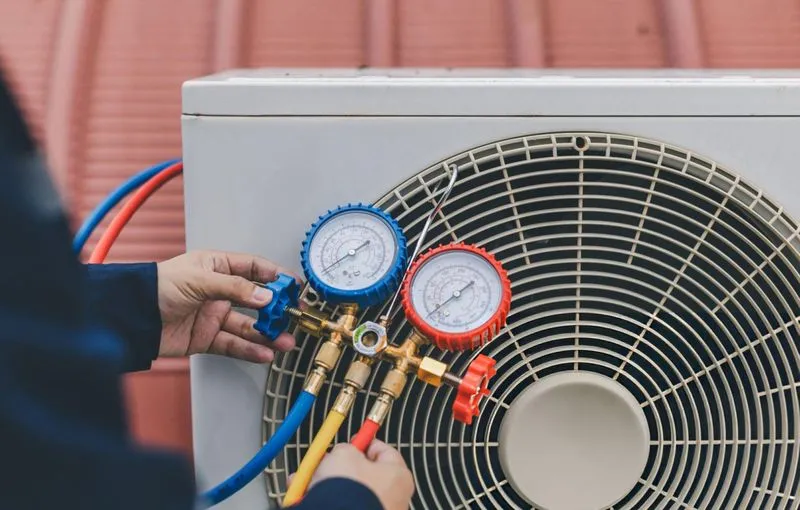
Temperature and refrigerant checks help reveal whether the air conditioner is actually removing heat as it should. A technician may measure the temperature difference between return and supply air, inspect the refrigerant line temperature, check the coil condition, and look for frost, oil stains, or unusual pressure readings. Low refrigerant is often blamed for poor cooling, but this should not be assumed without testing, as airflow problems can produce similar symptoms. If the refrigerant is low, the system may have a leak that needs to be found rather than simply adding more. Dirty outdoor coils can also prevent heat from leaving the system, leading to weak cooling and increased strain on the compressor. These measurements provide the repair team with concrete evidence of heat transfer. When temperature readings, pressure data, airflow measurements, and equipment condition are compared, the diagnosis becomes much clearer. That combined view helps avoid quick conclusions that may not solve the original comfort problem.
Quick Diagnosis Protects Comfort
A fast AC diagnosis is not rushed work. It is the result of a steady process that begins with symptoms and progresses through airflow, electrical testing, temperature readings, refrigerant checks, and an overall assessment of the system’s condition. Each step helps remove guesswork and points the repair team toward the true cause of poor cooling. Homeowners benefit because the problem can be explained more clearly, repairs can be planned with better information, and unnecessary work is less likely. When an air conditioner struggles during hot weather, quick and careful diagnosis can restore comfort sooner while protecting the system from extra strain and avoidable damage.
Read More: Signs You Need a Roof Repair and How a Roofing Contractor Can Help
