

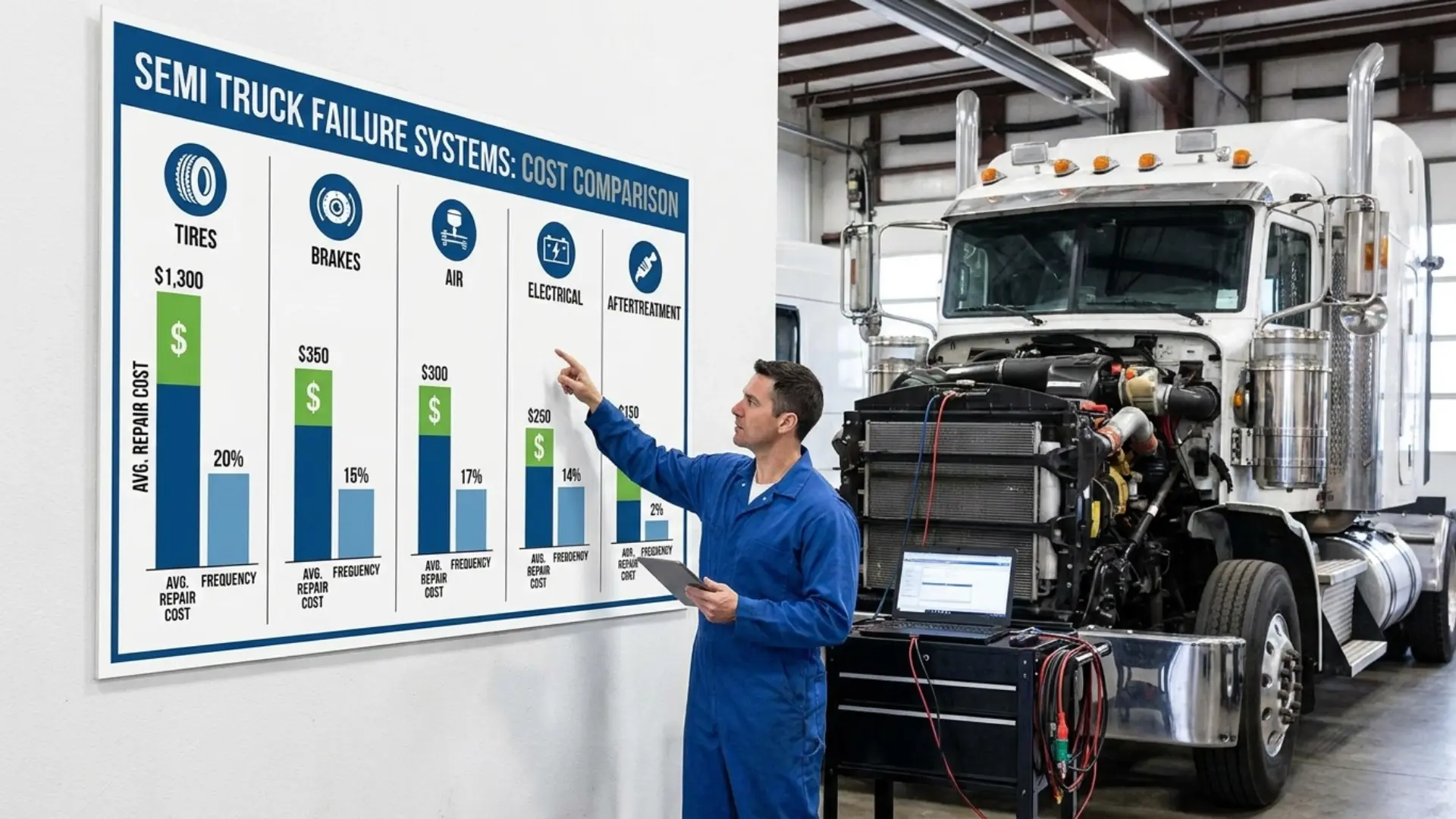
Electrical system issues in heavy-duty trucks can disrupt hauling schedules, compromise safety, and cause unexpected downtime on the road. These systems control everything from ignition and lighting to sensors, communication modules, and engine management components. When something goes wrong, identifying the cause is rarely straightforward because multiple circuits often share power pathways and grounding points.
Technicians rely on structured diagnostic methods to narrow down faults without replacing unnecessary parts. Modern trucks also integrate electronic control units that continuously communicate with various subsystems, making diagnosis more data-driven than ever. Understanding how these failures are traced helps explain why repair accuracy depends on careful testing rather than guesswork or quick assumptions.
Diagnosis Process Overview
- Initial Electrical Assessment and Symptoms Review
The diagnostic process usually begins with a detailed review of the truck’s reported symptoms combined with a visual inspection of accessible wiring and components. Technicians look for obvious warning signs such as blown fuses, corroded terminals, loose connectors, or damaged wiring harnesses that may have been exposed to heat or vibration over time. They also evaluate how the problem presents itself, whether it is intermittent or constant, and which systems are affected. For instance, a lighting failure might point toward a localized circuit issue, while multiple system malfunctions may suggest grounding or power distribution faults.
During this stage, technicians also examine the battery condition and alternator output, since an unstable power supply often produces misleading electrical symptoms. Environmental factors such as moisture intrusion or road debris damage are also considered, as they often contribute to hidden faults that develop gradually before becoming noticeable during operation.
- Electronic Testing and Fault Code Interpretation
At this stage, diagnostic tools are connected to the truck’s onboard computer system to retrieve stored fault codes. These codes provide valuable clues about which circuits or components are experiencing irregular behavior. However, they rarely point directly to a single failed part, so technicians must interpret them alongside physical test results. Voltage drop testing, continuity checks, and resistance measurements are commonly used to verify whether electrical pathways are functioning correctly.
In a semi-truck repair shop environment, advanced scan tools allow technicians to monitor sensor data in real time, helping them compare expected performance against actual readings. This combination of digital analysis and manual testing helps identify whether the issue is related to wiring faults, sensor failure, or control module communication errors. Misleading codes are also considered, since secondary faults can sometimes trigger alerts that do not reflect the original source of the problem.
- Wiring Harness Inspection and Circuit Tracing
Once initial data is collected, attention often shifts to the wiring harness, one of the most common sources of electrical problems in heavy trucks. These harnesses run through multiple sections of the vehicle, exposing them to vibration, temperature changes, and mechanical wear. Technicians carefully trace circuits to locate breaks, shorts, or areas of insulation deterioration. They may also perform tug tests on connectors to ensure secure connections and check for signs of pin corrosion inside plugs. Circuit tracing is a meticulous process because wires are often bundled tightly and routed through hard-to-reach areas of the truck frame.
Any disruption in signal flow can cause unpredictable behavior in lighting systems, engine controls, or dashboard indicators. Identifying these issues requires patience and a methodical approach, especially when faults appear only under specific operating conditions, such as changes in load, speed, or temperature.
- Power Distribution and Ground System Analysis
Electrical systems in heavy-duty trucks rely heavily on stable power distribution and proper grounding. When either of these elements fails, multiple systems can behave erratically simultaneously, making diagnosis more complex. Technicians examine fuse panels, relay boxes, and distribution modules to ensure power is being delivered consistently to all circuits. They also test grounding points across the chassis because poor grounding can cause voltage fluctuations that mimic more serious component failures. Corrosion, loose bolts, or paint interference at grounding locations often create resistance that disrupts electrical flow.
Load testing is also performed to evaluate how the system behaves when multiple components are active simultaneously. This helps reveal hidden weaknesses that might not appear during idle testing. By confirming stable power delivery and secure grounding, technicians can eliminate entire categories of potential faults and focus on more specific issues within the system.
- Sensor and Control Module Evaluation
Modern trucks depend heavily on sensors and electronic control modules to regulate performance and safety functions. When electrical failures occur, these components are often suspected because they continuously exchange data with the vehicle’s central systems. Technicians test sensors for accuracy by comparing their output to known reference values, ensuring they respond correctly under different conditions. Control modules are also evaluated for communication integrity, as disruptions in data exchange can cause cascading system errors. In many cases, software glitches or corrupted signals can produce symptoms that mimic hardware failure, necessitating recalibration or reprogramming rather than physical replacement.
Heat exposure, vibration, and electrical surges can all affect these components over time, leading to inconsistent performance. Proper diagnosis ensures that technicians distinguish between actual hardware damage and software-related irregularities, reducing unnecessary part replacements and restoring system stability efficiently.
- Final System Verification and Operational Testing
After identifying and addressing suspected faults, technicians perform comprehensive operational testing to confirm that the electrical system is functioning correctly under real-world conditions. This involves running the truck through simulated load scenarios while monitoring system responses in real time. They check lighting systems, ignition behavior, dashboard indicators, communication modules, and engine control feedback to ensure everything operates in harmony. Voltage stability is also verified across different circuits to confirm that earlier issues have been fully resolved.
Any remaining irregularities are re-evaluated before the truck is cleared for service. This final stage is essential because some electrical problems only appear when the system is under strain rather than during stationary testing. A successful verification process ensures that the vehicle is safe, reliable, and ready to return to demanding operational environments without risk of unexpected electrical failure.
Electrical system diagnosis in heavy-duty trucks requires a structured and highly detailed approach that combines electronic analysis, physical inspection, and operational testing. Each step plays a role in narrowing down complex issues that often involve multiple interconnected systems. From initial symptom evaluation to final road testing, technicians rely on careful measurement and logical troubleshooting rather than assumptions.
Modern diagnostic tools provide valuable data, but interpreting that information correctly remains essential for accurate repairs. By following a disciplined process, repair teams can efficiently identify faults, reduce downtime, and ensure long-term reliability for commercial vehicles operating under demanding conditions.
Read More: Why the Brands Winning at Paid Media Are Obsessed With Creative Systems, Not Creative Ideas
