

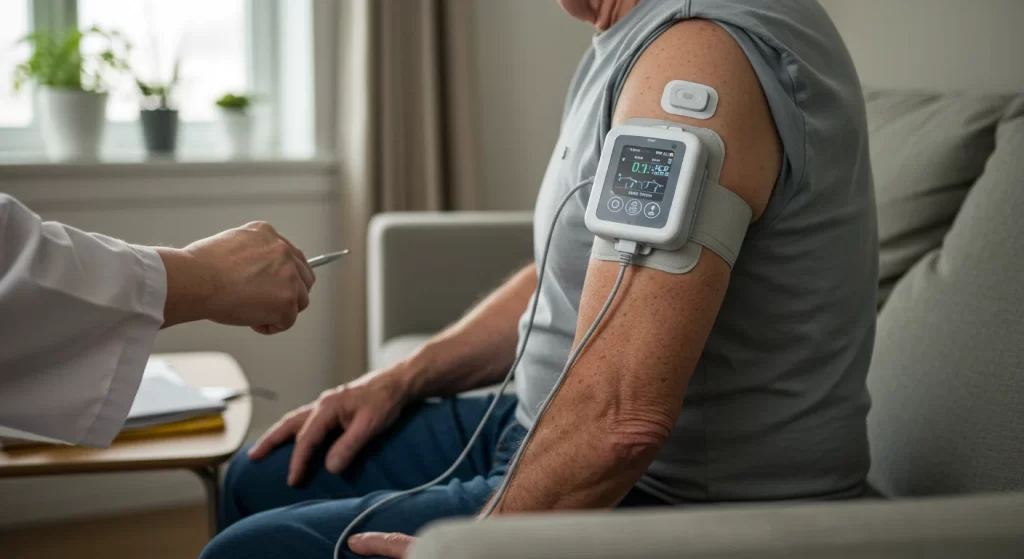
Medical devices generate a constant stream of clinical data, from bedside monitor readings to infusion pump activity and remote patient monitoring results.
Yet that data often remains separated from the electronic health record, forcing clinicians to rely on manual entry, delayed updates, or incomplete snapshots of a patient’s condition.
Medical device integration helps solve that problem by connecting devices, EHRs, and clinical workflows so information moves more reliably across care settings.
This article explains how integration works, why it matters, and how it can improve patient safety, documentation accuracy, care coordination, and clinical decision-making.
What Is Medical Device Integration and Why Does It Matter?
Understanding Medical Device Connectivity
Medical device integration allows data from clinical equipment to move into hospital information systems, electronic health records, and care team dashboards.
Instead of remaining trapped inside separate devices, information from patient monitors, infusion pumps, ventilators, imaging systems, and remote monitoring tools can become part of the patient record.
This matters because clinicians need timely, accurate data to make safe care decisions. A widely cited BMJ analysis estimated that medical error contributes to more than 250,000 deaths each year in the United States, while also noting that medical error is not consistently captured in national death reporting systems.
When device data flows into the EHR automatically, care teams can reduce manual transcription, improve documentation consistency, and see a fuller picture of the patient’s status.
For organizations that need vendor-neutral connectivity, Lifepoint Informatics supports patient monitoring device integration by extracting patient data from connected devices and delivering it to the referring medical record system or a secure provider portal.
The Shift From Siloed Data To Connected Care
Healthcare organizations generate large amounts of information every day. Without integration, that information may sit in separate device interfaces, departmental systems, or disconnected records.
This fragmentation creates extra work for clinical staff and increases the risk that important details will be missed.
Interoperability is improving, but gaps remain. ONC data shows that 70% of US non-federal acute care hospitals engaged in all four domains of interoperable exchange in 2023: sending, receiving, finding, and integrating patient information.
That still leaves many organizations with work to do, especially around making outside information usable inside the EHR.
Medical device integration helps close these gaps by bringing device-generated information closer to the clinical workflow.
Key Components Of Integrated Medical Devices
Integrated medical device environments usually depend on several layers working together:
- Physical devices: patient monitors, smart infusion pumps, ventilators, imaging systems, and remote monitoring devices
- Middleware platforms: systems that collect, normalize, route, and validate device data
- Communication standards: protocols such as HL7, FHIR, DICOM, and IEEE 11073
- EHR systems: the central record where device data becomes part of clinical documentation
- Security controls: safeguards for access, encryption, monitoring, and compliance
Standards are important because medical devices often come from different manufacturers.
The FDA recognizes IEEE 11073 standards for point-of-care device communication, including requirements that help devices with communication interfaces integrate into health IT systems.
Clinical Benefits of Medical Device Integration
Automated Vital Signs Documentation And Monitoring
Manual vital signs documentation takes time and creates room for transcription errors. With device integration, readings can move directly from monitors into the EHR after validation.
This supports more consistent charting and gives clinicians faster access to current patient data.
Automated documentation also helps clinical teams track trends. Instead of relying only on periodic spot checks, clinicians can review changes over time and identify patterns that may signal deterioration.
Faster Access To Patient Data
Timely access to patient information is especially important in emergency care, intensive care, perioperative care, and remote monitoring.
When device readings are available in the EHR or a secure clinical dashboard, providers do not need to search across multiple systems to understand the patient’s condition.
This can support faster escalation, more informed handoffs, and better coordination between nurses, physicians, specialists, and care managers.
Safer Medication Administration With Smart Pumps
Smart infusion pump interoperability can reduce medication administration risks by connecting medication orders, pump programming, and documentation. Instead of manually programming every infusion from scratch, clinicians can use connected workflows that help reduce entry errors and improve record accuracy.
A 2025 systematic literature review found that smart infusion pump interoperability was associated with reductions in specific medication administration errors ranging from 15.4% to 54.8%, while cumulative reductions across all medication administration errors ranged from 21.2% to 90.5% after implementation.
Better Alarm Management And Patient Surveillance
Hospitals often struggle with alarm fatigue. Too many alerts can make it harder for staff to identify the alarms that truly require immediate attention. Integrated systems can help by centralizing alarm data, filtering notifications, and routing alerts to the right care team members.
Continuous surveillance can also help detect changes that might be missed during routine rounds.
When connected monitoring systems identify sustained changes in respiratory rate, oxygen saturation, heart rhythm, or blood pressure, clinicians can respond before the patient deteriorates further.
How Integration Improves Patient Safety and Outcomes
Reducing Medication Errors Through Automated Checks
Connected medication workflows can support patient safety by combining barcode scanning, EHR verification, clinical decision support, and smart pump integration. These systems help confirm that the right medication is given to the right patient at the right dose and time.
They can also flag potential drug interactions, duplicate therapies, dosing issues, and documentation gaps before medication reaches the patient.
Preventing Falls With Connected Monitoring
Fall prevention often depends on timely visibility. Connected monitoring tools can alert staff when high-risk patients attempt to leave a bed or chair without assistance.
Video monitoring, bed-exit alerts, wearable sensors, and nurse call integration can all support earlier intervention.
These tools work best when paired with clinical judgment, risk assessment, rounding, and clear escalation protocols. Integration does not replace staff awareness, but it can give care teams more timely signals.
Detecting Patient Deterioration Earlier
Patient deterioration may begin hours before a serious event. Integrated monitoring helps clinicians see trends across vital signs and other data points, rather than isolated readings.
Early warning systems can combine continuous data with clinical rules or predictive analytics to identify patients who need reassessment.
This is especially useful in medical-surgical units, post-operative care, and remote patient monitoring programs, where changes can develop between scheduled checks.
Minimizing Transcription Errors And Data Gaps
Manual documentation can lead to missed values, delayed entries, incorrect units, or simple typing errors. Device integration reduces these risks by moving data directly from the source system into the clinical record.
Accurate documentation also supports billing, reporting, quality improvement, and care transitions. When the record reflects what happened at the bedside, downstream teams have better information to guide treatment.
Real-World Applications Across Healthcare Settings
Intensive Care Units
ICUs depend on a high volume of device data. Patients may be connected to monitors, ventilators, infusion pumps, dialysis machines, and other equipment at the same time. Without integration, staff may need to review multiple screens and manually document frequent readings.
Integrated systems can bring device data into a central view, support trend analysis, and reduce duplicate documentation. This gives clinicians more time to focus on assessment, intervention, and communication with the care team.
Operating Rooms And Anesthesia Management
Operating rooms generate time-sensitive information from anesthesia machines, monitors, imaging systems, and procedure documentation tools. Integration can help capture vital signs, medication events, and procedural data more consistently.
This supports better handoffs from pre-op to the operating room and from the operating room to recovery. It also helps reduce documentation delays after procedures.
Emergency Departments And Catheterization Labs
Emergency departments and catheterization labs need fast access to reliable data. Device integration can help clinicians review vital signs, procedure measurements, imaging data, and medication activity without waiting for manual updates.
In high-pressure settings, even small documentation delays can affect care coordination. Connected systems help teams act from the same information set.
Primary Care And Remote Patient Monitoring
Remote patient monitoring extends medical device integration outside the hospital. Blood pressure cuffs, glucose monitors, pulse oximeters, scales, and wearable devices can send data to care teams between visits.
This helps providers monitor chronic conditions, identify concerning trends, and adjust care plans without requiring every patient interaction to happen in person. It can also give clinicians more realistic insight into how patients are doing in daily life.
Post-Operative And Medical-Surgical Units
Post-operative patients may experience complications hours after leaving the operating room. Continuous or frequent monitoring can help identify early warning signs before a serious event occurs.
In medical-surgical units, integration can support surveillance without relying only on periodic spot checks. It can also help nurses prioritize patients who need faster reassessment.
Challenges in Medical Device Integration
Interoperability And Standardization
Medical devices and EHRs do not always communicate easily. Differences in data formats, device labels, timing, measurement units, and vendor requirements can make integration complex.
Standards such as HL7, FHIR, DICOM, and IEEE 11073 help, but implementation still requires planning, testing, governance, and ongoing maintenance.
Healthcare organizations need to define which data should flow, where it should appear, and how clinicians should use it.
Data Security And Compliance
Device integration expands the number of connected systems that handle patient information. That makes cybersecurity and compliance essential.
Healthcare remains one of the most expensive industries for data breaches. IBM’s 2025 Cost of a Data Breach report, summarized by HIPAA Journal, placed the average healthcare breach cost at USD 7.42 million.
HIPAA penalties are also adjusted over time. Current reporting on 2026 HIPAA penalties lists civil monetary penalties ranging from USD 145 to USD 2,190,294 per violation, depending on the level of culpability.
Strong access controls, encryption, audit trails, vendor review, and incident response planning should be part of any integration project.
Implementation Costs And Legacy Systems
Many healthcare organizations still rely on legacy systems that were not built for modern interoperability.
Integration may require interface development, middleware, testing, staff training, and long-term support.
The best approach is often phased. Organizations can start with high-impact workflows, such as vital signs documentation, smart pump interoperability, or remote patient monitoring, before expanding to more complex use cases.
Staff Training And Workflow Design
Technology succeeds only when it fits the clinical workflow. Staff need clear guidance on how device data is captured, validated, displayed, and acted on.
Training should focus on practical scenarios. Clinicians need to know when data enters the record automatically, when review is required, how alerts are routed, and what to do if a device or interface fails.
Conclusion
Medical device integration helps healthcare organizations turn scattered device readings into usable clinical information.
By connecting monitors, pumps, remote devices, and EHR systems, care teams can reduce manual documentation, improve data accuracy, respond faster to patient changes, and support safer medication workflows.
The strongest results come from thoughtful planning, secure architecture, staff training, and phased implementation focused on high-value use cases.
While interoperability, legacy systems, and compliance requirements can create challenges, integrated device data gives clinicians a clearer and more timely view of the patient, which supports better care decisions across hospital and remote settings.
